
INCREASED COYOTE ACTIVITY:
There are a variety of reasons why residents might be observing increased coyote activity this time of year:
- Mating season:
Mating season starts at the end of December and usually goes until the start of March. There will be increased activity amongst the coyote populations as lone coyotes look for mates. They will also be very defensive around people and pets as to protect their potential mates, dens, and offspring.
- Nearby construction:
May result in the disturbance of rodent burrows underground which promotes rodent activity above ground which also can become a large food source for coyotes.
- Dog owner’s failing to pick up after their pets due to the cold weather:
Dog feces attract rodents and coyotes. Coyotes not only prey on the rodents but also consume the feces due to undigested nutrients found in it.
- Intentional wildlife feeding
While it may appear that food resources are scarce during the winter months, wildlife can forage for themselves without the assistance of humans, feeding wildlife hurts the wildlife and the community.
- Prevalence of rodents near residential properties:
Rodent activity due to accessible food sources and shelter in residential areas are a significant food source for predatory animals including coyotes.
TIPS FOR PET OWNERS
Animal Services reminds residents that coyotes can be defensive around domestic dogs – coyotes view dogs as threats to their dens, themselves, and their pups. Animal Services recommends:
- Keeping dogs on a short leash and walk in areas and always being aware of surroundings
- Supervising pets in proximity (even on own property) will lower the risk of a pet being involved in a wildlife incident
- Keep cats indoors
SAFETY
Coyotes continue to pose a low risk to people and pets. Incidents involving coyotes remain consistent. Animal Services has completed our 2025 coyote stats and they indicate that the following increases the risk of a coyote incident:
- Dog left unattended on the owner/harborer’s property
- Dog permitted to run at large in a green space
- Cat permitted to run at large
TIPS FOR COYOTE ENCOUNTERS
- Look big by putting hands in the air (do not turn and run!)
- Wave arms and shout loudly
- Throw something towards them
- Carry something that makes a loud noise such as an alarm, umbrella, garbage bag, cell phone, or a can full of coins (do NOT use whistles)
- Contact Police if in immediate danger
INTERACTIVE COYOTE MAP
Education, awareness, and enforcement are all key in keeping the community safe. We encourage all resident sightings of coyote, especially those considered sick, injured, or nuisance in nature, to be reported through our online interactive coyote activity map, www.mississauga.ca/coyotemap which provides us with timely and more detailed accounts of these sightings, in order to inform our response and allocate resources for outreach and enforcement.
DO NOT FEED THE WILDLIFE (it’s illegal!)
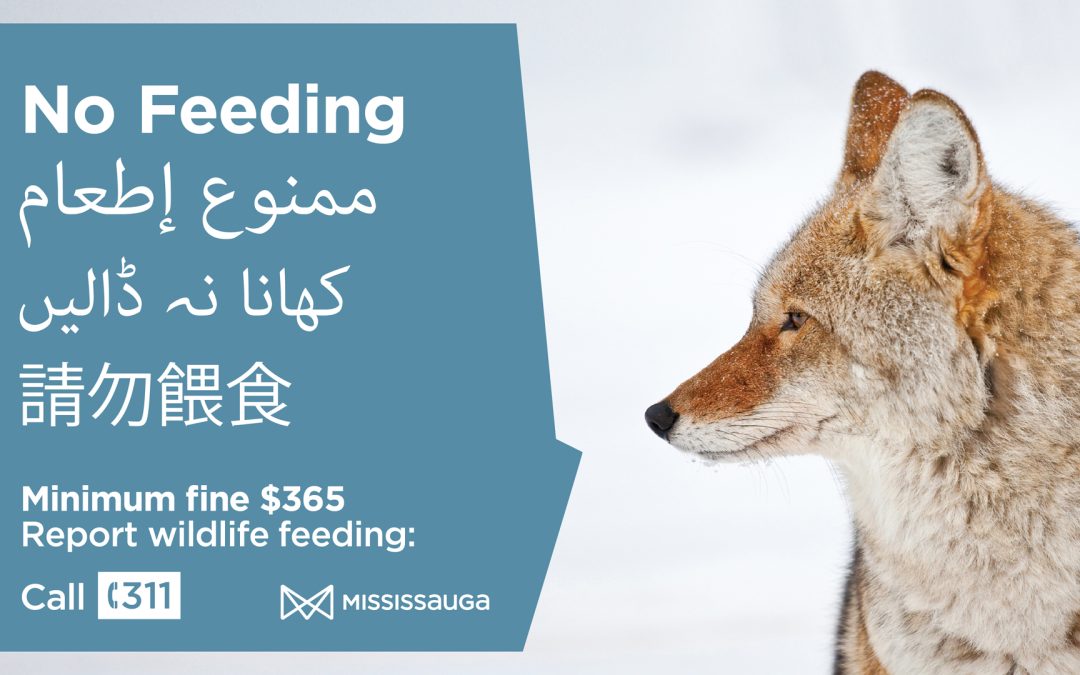
Although food may seem scarce for some wildlife like squirrels and pigeons, feeding them only attracts larger predators like foxes and coyotes (…and it’s an offence under the Animal Care and Control ByLaw 0098-2004). Because raccoons, foxes, and coyotes are omnivores, any type of food can be an attractant for them, including fruit windfall, spilled bird seed and dog feces. We encourage residents to report anyone who is intentionally feeding wildlife – they can do so by calling 311. Wildlife feeding fine – Minimum = $365, Maximum = $100,000
ADDITIONAL RESOURCES
Animal Services’ Coyote Awareness video – https://www.youtube.com/watch?v=p8jzjAdh0Jk
Animal Services’ Coyote Information Session video – https://www.youtube.com/watch?v=xPbvGefrwRw&t=506s
Mississauga wildlife webpage – www.mississauga.ca/wildlife
Animal Services contact number – 905-896-5858